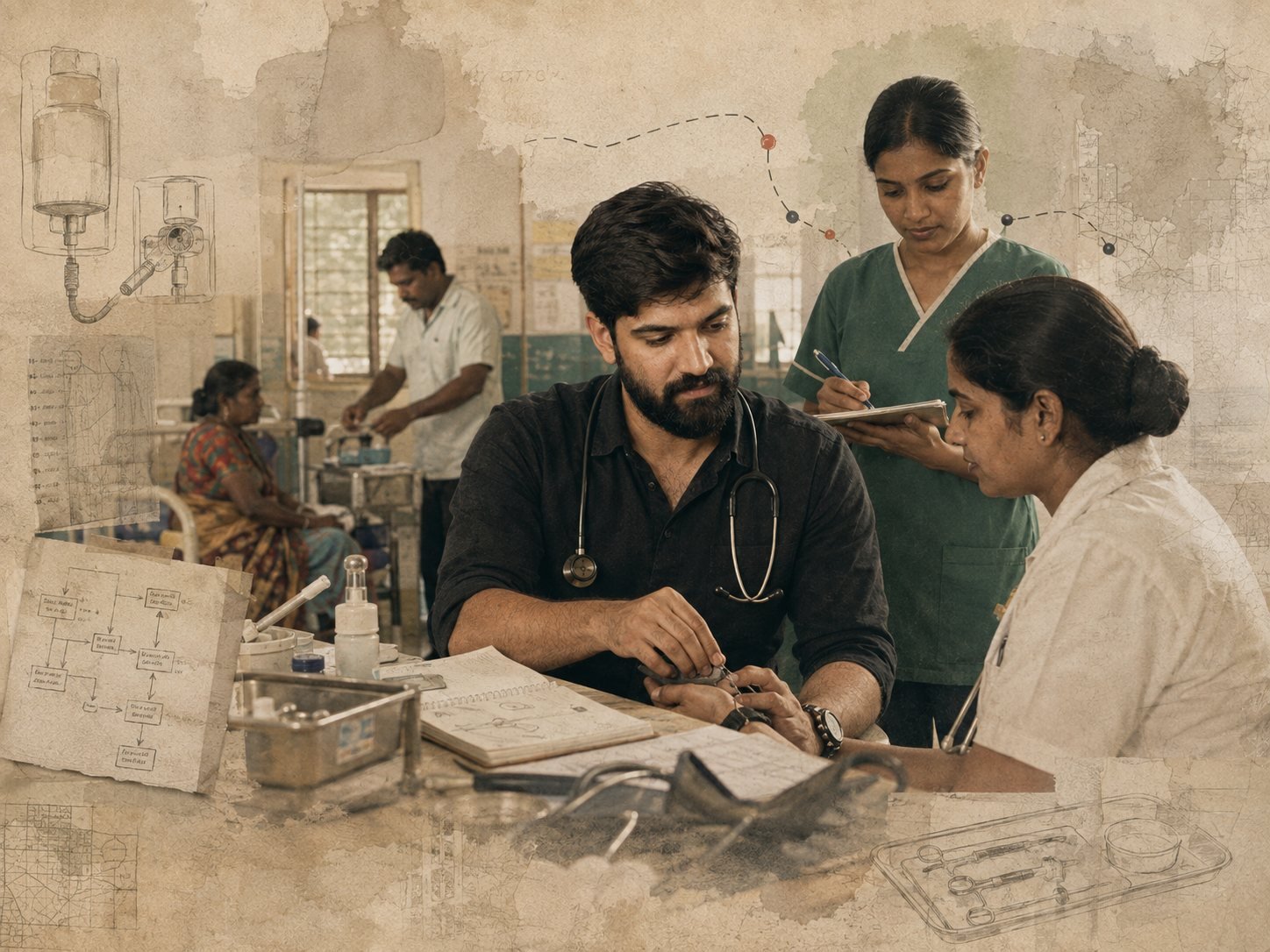
FIELD NOTES

Things hospitals taught me after the PowerPoint ended.

Not case reports. Not institutional positions. Just observations from trying to understand care, teams and systems in places where reality has its own reviewer comments.

FIELD NOTE 01

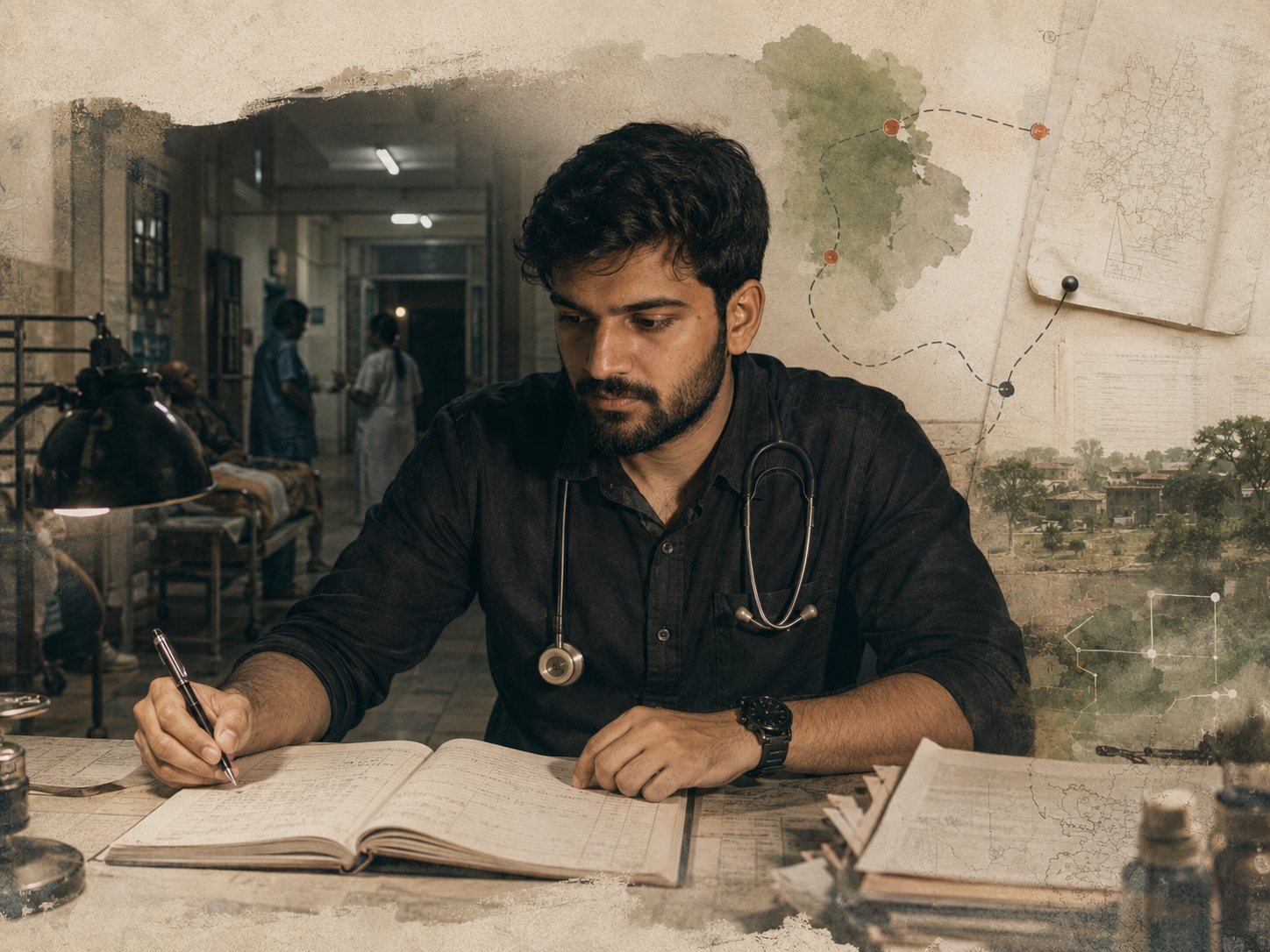
The night-shift doctor is now dean, superintendent and switchboard

A district hospital lesson in how quickly job descriptions become aspirational after 8 PM.

In a large hospital, confidence is partly built into the building: specialists, imaging, blood and colleagues are somewhere nearby.

In a district hospital, the night can compress an entire institution into the few people who are actually there.

That is when “What should ideally happen?” becomes “What can we safely make happen here, tonight?” The latter has been a much more useful question for me.
FIELD NOTE 02

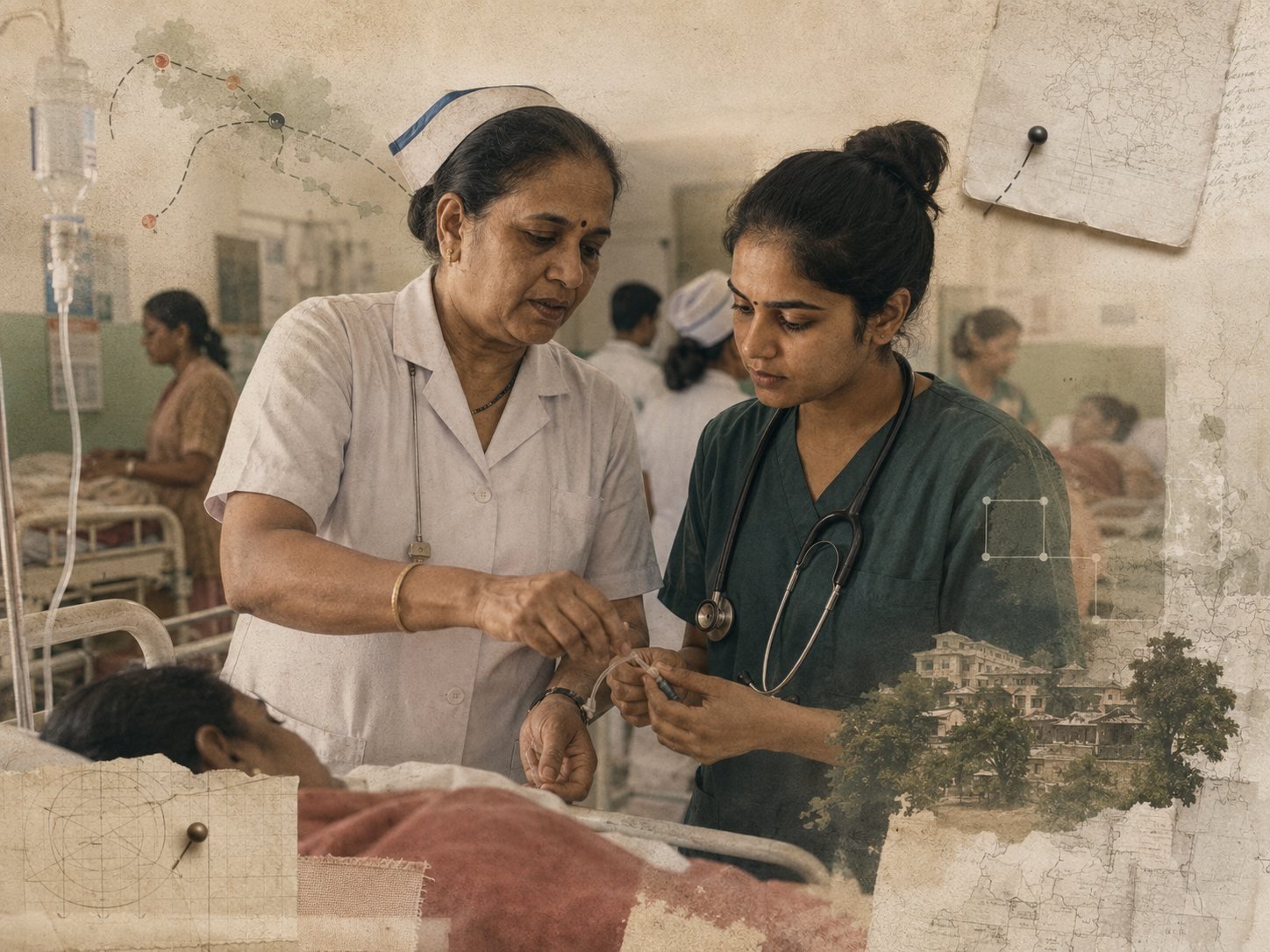
The specialist was the senior nurse

Competence has never been particularly respectful of hierarchy.

Some of the most useful clinical and operational lessons I have received did not arrive from the person with the longest degree after their name.

People who have lived inside a system for years know where it bends, where it breaks and which workaround is actually dangerous.

A health system has an organogram. Fortunately, wisdom remains poorly compliant with it.

FIELD NOTE 03

When ideal is not practical, practical still has to be safe

Adaptation is not surrender. It is implementation with its eyes open.

Resource constraints can trigger two bad responses: pretending the constraint does not exist, or using it as permission for unsafe care.

The interesting work is between those extremes — protect the non-negotiables, adapt everything else, then test whether the adapted version actually works.

Practical is not the opposite of rigorous. Done properly, it is where rigour earns its salary.

A NOTE ON THESE NOTES

Memory is selective. So is storytelling.

These reflections are deliberately de-identified and written to extract a systems lesson, not to turn patients or colleagues into content.

Priyansh Nathani
Doctor · global surgery · health systems · chronic question-asker

Built to explain the person behind the CV. The CV already has enough work.